Wd External Hard Drive Tool For Mac
- Wd External Hard Drive Drivers
- My Passport Wd External Hard Drive
- Wd External Hard Drive Not Recognized
- Western Digital Support
So, you just bought an external hard drive or a portable SSD and wanted to use it on your Mac. But somehow, macOS doesn’t allow you to write data to the drive.
That’s all because it’s been initialized with Windows NT File System (NTFS), which is primarily for PCs. Apple Mac machines support a different file system.
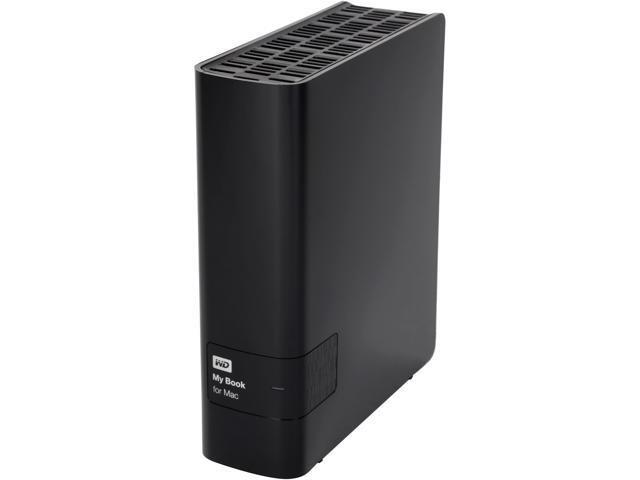
Automotive Tools & Equipment. WD External Hard Drives. Showing 40 of 13132 results that match your query. Search Product Result. Product - WD 4TB My Passport for Mac Portable external Hard Drive - USB-C/ USB-A Ready. Reduced Price. Product Image. List price $ 160. You can format your external hard drive from either the PC or Mac. Just keep in mind if you want to use your drive also for OS X’s Time Machine backups, we advise you to format your drive through Mac because there is an additional step to make drive compatible with “Time Machine Backups”. If your WD external hard drive is formatted as a large partition, you may need to turn to “Hard Disk Drive” since the disk will be presented as a whole. The recovery process of selecting “ Hard Disk Drive ” to recover data is almost the same to that of using “ Removable Disk Drive ”. Find great deals on eBay for wd external hard drive for mac. Shop with confidence.
In this post, I’m going to show you how to format your external drive for a Mac compatible file system i.e. Mac OS Extended (Journaled). Just follow this easy step-by-step guide and you’re all set.
Important note: If you have useful files stored on the external drive, be sure to copy or transfer them to another safe place prior to formatting. The operation will erase all data and your files will be gone for good. You could use a recovery program like Data Rescue to retrieve them, but the odds of recovery vary.
Pro tip: If your external drive has a large volume, like mine – a 2TB Seagate Expansion. I highly recommend you also create multiple partitions. I’ll also show you how to do that below.
Most External Hard Drives Are Initiated with NTFS
During the last several years, I’ve used several removable drives, including a 500GB WD My Passport, 32GB Lexar flash drive, and a few others.

Three weeks ago, I bought a brand new 2TB Seagate Expansion to backup my MacBook Pro before I updated to the latest macOS, 10.13 High Sierra (also see those High Sierra issues I encountered).
When I connected the Seagate to my Mac, the drive icon showed up like this.
When I opened it, the default content was all there. Since I wanted to use it on Mac, I clicked the blue logo with the text “Start_Here-Mac”.
It brought me to a webpage on Seagate’s site, where it clearly indicated the drive was initially set up to work with a Windows PC. If I wanted to use it with Mac OS or Time Machine backup (which is my intent), I’ll need to format the drive for my Mac.
I then right-clicked the external drive icon on Mac desktop > Get Info. It showed this format:

Format: Windows NT File System (NTFS)
What is NTFS? I’m not going to explain here; you can read more on Wikipedia. The problem is that on macOS, you can’t work with files saved on an NTFS drive unless you use a paid app Paragon NTFS for Mac.
How to Format an External Drive to Work with Mac (from NTFS to Mac OS Extended)?
Note: The tutorial and screenshots below are based on macOS Sierra 10.12.5. They might be different if your Mac has a different version.
Step 1: Open Disk Utility.
The quickest way to do this is a simple Spotlight search (click the search icon on the upper right corner), or go to Applications > Utilities > Disk Utility.
Step 2: Highlight your external drive and click “Erase”.
Make sure your drive is connected. It should show up on the left panel under “External”. Select that disk and click the “Erase” button, the one highlighted in red in the screenshot below.
Step 3: Select “Mac OS Extended (Journaled)” in Format.
A new window will pop up asking which file system you’d like to format the external drive to. By default, it’s the Windows NT File System (NTFS). Select the one shown below.
Pro tip: If you want to use the external drive for both Mac and PC, you can also select “ExFAT”. Learn more about the differences between these file systems from this thread.
By the way, you can also rename your external drive.
Step 4: Wait until the erasing process is complete.
For me, it took less than a minute to format my 2TB Seagate Expansion.
You can also check to see if the format was successful. Right-click on the icon for your external drive on Mac desktop, then select “Get Info”. Under “Format”, you should see text like this:
Congratulations! Now your external drive has been formatted to be fully compatible with Apple MacOS, and you can edit, read, and write files to it as you want.
How to Partition an External Hard Drive on Mac
If you want to create multiple partitions on your external hard drive (in fact, you should for better file organization), here’s a step-by-step guide:
Wd External Hard Drive Drivers
Step 1: Highlight your drive and click “Partition” in Disk Utility.
Open the Disk Utility app and highlight your external hard drive. Make sure you select the disk icon right under “External”. If you select the one below it, the Partition option will be greyed out and become unclickable.
Step 2: Add partitions and allocate volume for each one.
After clicking “Partition”, you’ll see this window. Located on the left is a big blue circle with the name of your external drive together with its volume size. What you need to do next is click the add “+” button to increase the number of partitions on your external disk. Then allocate the desired volume to each partition. You can do that by clicking the small white circle and dragging it around.
After that, you can rename each partition and define a file system for it.
Step 3: Confirm your operation.
Once you hit “Apply”, a new window pops up asking for your confirmation. Take a few seconds to read the text description to make sure it reflects what you intend to do, then click the “Partition” button to continue.
Step 4: Wait until it says “Operation successful.”
To check whether the operation is really successful, go to your Mac desktop. You should see multiple disk icons show up. I chose to create two partitions on my Seagate Expansion — one for backup, the other for personal use. You can find more info in this post: How to Backup Mac to an External Hard Drive.
That wraps up this tutorial article. I hope you find it helpful. As always, let me know if you have any issues during the formatting or partitioning process.
As a Western Digital hard drive user, you may have the habit to store most of your digital media in the hard drive. The big capacity make it convenient to store your file and take it to anywhere. But it has a fatal defect that if you mistakenly deleted some important files from the hard drive, you possibly can not recover them from trash. Does it mean that you will lost the files forever? No, we have a solution to recover files from Western Digital external hard drive easily. Also with this method, you do not need to worry about the data loss led by virus attack, power loss, accidental formatting or any other factors.
Part 1. Western Digital External Hard Drive Recovery Software
Data loss may occur in everyone's life. Most people do not know what they have to do in order to save their files or documents in their external hard drives. Luckily, there is a powerful program called iSkysoft Data Recovery for Mac.
It is considered as the best Western Digital data recovery mac software (macOS 10.12 Sierra supported), which is able to pull back any documents, audio, videos, pictures, and any other deleted files from any Western Digital hard drives. This Western Digital hard drive recovery software can go back to the previous state before the hard drive is broken. Then, it can restore all files to Mac computers, especially when the hard drives cannot be used anymore. Another benefit of using this western digital recovery software is its ability to work with any storage devices like memory cards, USB drive, external hard drives and more.
My Passport Wd External Hard Drive
Part 2. How to Recover Western Digital Lost Data on Mac (El Capitan, macOS Sierra and macOS High Sierra)
Step 1. Select File Types
Wd External Hard Drive Not Recognized
Connect your Western Digital hard drive with computer and launch iSkysoft Data Recovery for Mac. Choose the target file types you want to scan and recover. Then click 'Next' button on the bottom of the window.
Step 2. Scan Western Digital Lost Data
Select your Western Digital hard drive from the list displayed and click the 'Start' button on the bottom of the window to start scanning the lost data on your portable disk.
Step 3. Retrieve Lost File from WD Hard Drive
You can check the scanning status on main window and in a few minutes, all the recoverable files will be shown to you. Choose the one you want to restore and click the 'Recover' button on top. Then designate a folder to save the file to be recovered. Please don't save these files to the original Western hard disk, or they will be overwritten permanently.
Part 3. Recovering Western Digital External Hard Drive on Windows
If you are using Western Digital external hard disk, you can follow the steps laid out in this post to retrieve lost or accidentally deleted content. In order to get back the data, you will need iSkysoft Data Recovery for Windows. The data recovery tool from iSkysoft excels in its field and helps you in recovering files such as pictures, videos, documents, and any other data from your Western Digital hard drive.
Why Choose This Windows Western Digital External Hard Drive Data Recovery Software:
- Raw data recovery, partition and resume recovery
- A three-step operation for quick retrieval of content
- Flexible recovery settings and preview ability
Step-by-Step Guide to Recover Files from Western Digital External Hard Drive on Windows
Step 1. Download and Install the Software
Visit the website of iSkysoft Data Recovery to download Windows operating system version. Continue with the installation procedure like a regular program or Windows PC. After finishing, launch the software. As the main interface appears on the screen, you will notice 6 different file type options. Click on the file types you want to recover, and then click 'Next' button.
Step 2. Scan the Drive
A new screen appears where you will see the partitions of the local hard disk. You have to browse to the connected Western Digital external hard drive from the Explorer window. Press the 'Start' button at the bottom to begin the scan.
Step 3. Recover Files from Western Digital External Hard Drive on Windows
Upon completion of scanning, iSkysoft Data Recovery for Windows will display all the recoverable content categorized according to files format. You can select the necessary files from the left pane of the screen and have a peek at the content in the preview screen to the right. You can have the necessary files and press the 'Recover' button. A small pop-up appears asking you to select the destination path. Choose a folder on your computer and wait for the program to complete the process.