Proxy Tool For Mac
Download and install Fiddler for free. Watch a quick Get started video. Company Overview. If you'd rather check for updates manually, set the option in Tools -> Fiddler Options. Release History. More About Fiddler. The free web debugging proxy. More About Test Studio. Automated functional, load, and performance testing. Proxy.app is the perfect tool for debugging and analysing both HTTP requests and responses and modify data in transit. It can be used to debug hard problems while doing. Commercial $ $ $ Mac. Download and install Fiddler for free. Watch a quick Get started video. Company Overview. If you'd rather check for updates manually, set the option in Tools -> Fiddler Options. Release History. More About Fiddler. The free web debugging proxy. More About Test Studio. Automated functional, load, and performance testing. Kakaroto / SWProxy. Pull requests 8. Projects 0 Insights Dismiss. Using it on a MAC. As it is only provided as a binary is not licensed under the same terms as the rest of the tool. FAQ Can I change the port the proxy server runs it. Yes, the first argument of SWProxy is the port number to use. Free download Orbot Proxy with Tor for PC at: Orbot Proxy with Tor is available for Windows, Mac, Linux and Mobile. Download Hola Free VPN Proxy For PC Windows and Mac can be easily installed and used on a desktop computer or laptop running Windows XP, Windows 7, Windows 8, Windows 8.1, Windows 10 and a Macbook, iMac running Mac OS X. This will be done by means of an Android emulator.
In previous jobs when I've worked on a Windows machine, I've used Fiddler for viewing HTTP transactions and debugging.
I'm specifically looking to monitor the HTTP transactions for an ajax site I'm working on to verify that the site is doing what I expect. Rewriting HTTP (as provided by Fiddler) is a nice-to-have, but not essential.
Can anybody recommend something similar for use on a Mac?
closed as off-topic by ChrisF, nc4pk, mpy, Shekhar, MosesNov 12 '13 at 18:23
This question appears to be off-topic. The users who voted to close gave this specific reason:
- 'Questions seeking product, service, or learning material recommendations are off-topic because they tend to become obsolete quickly. Instead, describe your situation and the specific problem you're trying to solve. Here are a few suggestions on how to properly ask this type of question.' – ChrisF, nc4pk, mpy, Shekhar, Moses
15 Answers
Use Chrome and navigate to chrome://net-internals/
It allows detailed analysis and dumps.
I found Charles Proxy. It's much closer to the functionality of Fiddler. It's not free, but it may be worth the price.
I've used mitmproxy for intercepting HTTP traffic. It's a great tool and you can use it for debugging mobile devices as well or any operating system for that matter.
My favorite mac app for monitoring traffic is HTTPScoop, I detail that as well as using tcpdump from the commandline in this post I blogged last year.
Not what you asked, but in Firefox the Live HTTP Headers add-on is all I need if I want to edit and re-play requests, including changing the URL and the HTTP method.
In Firebug, the Network Monitoring shows all requests and responses. Likewise, in Safari the Resources pane of the built-in Web Inspector covers most of my needs as well. (Enable the Web Inspector through the preferences: Show Develop menu in menu bar.) Chrome and Firefox have similar tools.
When things get more complicated, I fire up my Wireshark packet sniffer. However, unlike Fiddler, Wireshark does not let you change the data, and does not support things like auto responders, like Fiddler apparently does.
For Wireshark, see Hyper Text Transfer Protocol (HTTP) for some generic HTTP capturing information, and HTTP Packet Capturing to debug Apache, for some example display filters. (You may want to set the capture filter to 'port 80', to show all requests to that port, and responses from that port. Or, to limit to some server, use capture filter 'port 80 and host www.google.com'.) Like:
Note that Wireshark can decompress gzip or deflate encoded (compressed) things on the fly for you. That makes things much easier to read as most web servers will compress the data they send to a browser.
(As for auto responders: the excellent JS Bin has a short video on how to use it to debug Ajax requests. If you don't know JS Bin, then first view the introduction video.)
In addition to Charles (already mentioned), I also like the HttpFox add-on for Mozilla Firefox. Like Charles, you can use it on both Mac and Windows. It's lighter-weight than Charles because it lives in the browser, useful for quick troubleshooting. Here's some information from the HttpFox page:
HttpFox monitors and analyzes all incoming and outgoing HTTP traffic between the browser and the web servers.
It aims to bring the functionality known from tools like HttpWatch or IEInspector to the Firefox browser.
Information available per request includes:
- Request and response headers
- Sent and received cookies
- Querystring parameters
- POST parameters
- Response body
And, a screenshot:
Not a proxy, but it does help in debugging HTTP:
Simply start a scan on the interface you're going to have the HTTP traffic on, execute the traffic and then stop scanning and type 'HTTP' as the filter string. You will then be able to inspect all the packets of the HTTP conversation. With the Packet Detail view open you can open the HTTP section and it will stay open between packets.
It's a great tool to have and it doesn't require you to change the browser proxy. On the other hand it cannot help with HTTPS traffic since that's encrypted. (Although it can decrypt SSL connections that use RSA)
I'm late but - I use Paros Proxy. It's in Java, so, cross-platform. Though if you would prefer for it to be packaged as an app, there's one here at the bottom.
Don't forget Burp Suite. They have a free version. It's cross platform. http://portswigger.net/burp/
It seems that the free GlimmerBlocker can do part of the trick.
Of course it can block all kind of content, and transform responses before the browser receives them. But it can in fact modify both requests and responses. And though not true debugging, it also offers logging. So, it might suit basic needs:
There are 4 types of scripts running inside GlimmerBlocker, and some objects are only defined for some of the script types:
- global proxy: this sets the global proxy settings, and can test for e.g. location name, AirPort network.
- request modification: this can change the requested URL, send back a redirect response to the browser, or send text/html back to the browser.
- keyword expansion. [Safari-only, AvB]
- transform: modify the response received by the web-server before it is sent back to Safari [or any browser that is set up to use the proxy provided by GlimmerBlocker, AvB].
(One can also use it to include various Greasemonkey scripts in the received response, without using a Greasemonkey add-on, like to block Flash without installing any add-on.)
You can easily configure Fiddler for Mac using Parallels as per instructions on their site.
The only caveat is that you have to manually configure your Network settings to point to the IP address of the VM but not really that big of a deal.
jMeter might also be helpful; it's designed for testing load performance on web servers, but it might still do what you need. jMeter is written in Java, so you can download a .jar file that will run on Mac, Windows, or Linux.
If you're dealing with app traffic or third-party API integrations that go over the public internet, you should try Runscope (of which, full disclosure, I am a co-founder). It captures HTTP requests to any URL, gives you a nice stream view for debugging and makes it easy to share individual requests with others.
You could also try APIKitchen. It helps you in debugging and testing HTTP APIs and any requests in general. It also has an offline version for testing in your internal networks. No installation necessary.
Not the answer you're looking for? Browse other questions tagged macosmachttpweb-developmentsniffing or ask your own question.
I use the Fiddler proxy to debug all kinds of HTTP issues on Windows. It's great for inspecting headers and responses across multiple pages.
Is there a good HTTP debugging proxy for Mac and Linux? I found Charles, but it's $50 once the trial runs out and it crashed on me. I could use Wireshark, but it's a pain.
George V. ReillyGeorge V. Reillyclosed as off-topic by josliber♦Feb 7 '16 at 21:41
This question appears to be off-topic. The users who voted to close gave this specific reason:
- 'Questions asking us to recommend or find a book, tool, software library, tutorial or other off-site resource are off-topic for Stack Overflow as they tend to attract opinionated answers and spam. Instead, describe the problem and what has been done so far to solve it.' – josliber
17 Answers
You can of course, just use Fiddler on a Windows PC and point the Mac/Linux box at it. http://www.fiddlerbook.com/fiddler/help/hookup.asp#Q-NonWindows
You can also run Fiddler in a Windows or Linux virtual machine on the Mac itself: http://blogs.telerik.com/fiddler/posts/14-01-15/running-fiddler-in-virtualbox-on-mac
EricLawEricLaw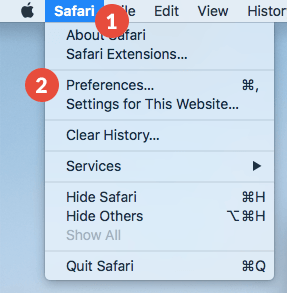
Mitmproxy is a useful command-line proxy tool.
It has also an user UI.
- From the command line run
mitmweb - Set up your app to use a proxy server and point it at http://127.0.0.1:8080
- Go to http://127.0.0.1:8081 to see all the requests in the 'flow' tab. Very similar to the Google Chrome Console 'Network' tab.
Mac Proxy Software
George V. ReillyZaproxy, a fork of Paros, is a cross-platform open source debugging proxy and is actively maintained under OWASP.
NathanNathanCharles is $50 as you know, but I find it to be completely worth the money. A ton of features, including SSL support.
FWIW, I've never had it crash on me.
Cody CaughlanCody CaughlanWireshark won't help you if you have to debug HTTPS requests (unless you can get the encryption keys for both endpoints - see the Wireshark site for details). Firebug and Tamper Data are getting close, but for thorough analysis, I sometimes like to save a recorded session. I'd recommend giving the OWASP Zed Attack Proxy (the successor of Parosproxy, which is no longer actively developed) a try. It is a Java application serving as a http(s) proxy; it provides quite a lot of features and proved to be very helpful to me in the past.
ZAP offers an easy autoconfiguration of Firefox. Bear in mind to do that on a separate (meaning: not for other browsing activities) Firefox profile: In order to intercept https, ZAP will install a new SSL certificate.
You may want to try Live HTTP Headers add-on for Firefox.
Paros works like a charm for me on my Ubuntu Jaunty x64. Just as simple as download, run, set proxy settings in browser to localhost:8080 and you are ready to inspect your http browsing.
It is Java so it works on Windows, Linux and Mac.
I prefer this to firefox plugin because I can use it with different browsers and software.
ParosProxy download: http://sourceforge.net/projects/paros/
Paros hasn't been updated for many years. However there is an actively maintained fork of Paros - the OWASP Zed Attack Proxy (ZAP): https://www.owasp.org/index.php/OWASP_Zed_Attack_Proxy_Project
AShelly
There are a number of Chrome store apps now. I'm using DHC by Restlet now.
josliber♦I personally find Wireshark to be quite easy to use. Just apply a filter for HTTP traffic and right click on the traffic going/coming to/from your site and click 'Follow TCP stream'.
But, if you want something a little more specific for HTTP debugging I would recommend Firebug http://getfirebug.com/

If you limit yourself to Firefox, the Tamper Data extension is pretty solid.
Josh LeeJosh LeeBetwixt - based on Chrome DevTools interface
Some additional options located on Ask Ubuntu.
Another option is something that doesn't require a desktop app. Runscope is a 'cloud' based proxy that let's you debug requests. It can't capture requests on localhost or internal networks, but if you're debugging apps or third-party API integrations over the public internet, it can help.
(Disclaimer, I'm one of the founders.)
John SheehanJohn SheehanIf you can do some Perl, I think you should have a look at the HTTP::Proxy module.
You can also try Proxy.app by Websecurify. It is 100% native, available from the Mac App Store.
PassPassYou can use chrome: chrome://net-internals/#events
I know this an old question but I have ended up here many times looking for a solution for this.
I tried Wireshark ( Horrible )Burp ( Ok just not good enough )Fiddler mono version ( Buggy as hell )Charles& many more.
Non of these tools felt half as useful as fiddler on windows.
I found a new extension to Postman ( Nice tool for making http request ) Postman proxy it allows you to monitor http requests much the same way as fiddler does in windows.
Change Proxy Settings On Mac
Hope this helps someone.
ZAP 2.4.3 Standard is the finest HTTP debugging proxy for Mac and Linux i can find. I have used Fiddler on windows but for Linux i faced similar problem and during my search i came to know about ZAP. I am using it and it has a very rich user interface.