Html Tool For Mac
As a designer, I take on a number of personal and freelance projects. These various tasks all have different needs when it comes to tools and systems, so it’s vital to know what works well for which task. I work on both PC and Mac, so all the tools on this list are multi platform, or have a great alternative. Image Tool is a utility to scale images and convert image file formats. Source images can be tiff, jpg, gif, bmp, png or pdf. Source Images can be dragged.
- Html Tool Mac Free
- Itool For Mac
- Free Snipping Tool For Mac
- Free Tool For Mac
- Chrome Cleanup Tool For Mac
- Adware Removal Tool For Mac
- Snippet Tool For Mac
Today's Best Tech Deals
Picked by Macworld's Editors
Top Deals On Great Products
Picked by Techconnect's Editors
Softpress Systems Freeway Express 6
Read Macworld's reviewRiver SRL Sparkle
Read Macworld's reviewKarelia Software Sandvox 2
Read Macworld's reviewRealmac Software RapidWeaver 6
Read Macworld's reviewMacaw 1.5
Read Macworld's reviewRage Software EverWeb 1.8.2
Read Macworld's reviewCazoobi Blocs 1.3
Read Macworld's review
A crowded slate of Mac apps aim to make building a full-featured, modern website drag-and-drop simple. Many even support one of the most crucial new web trends: responsive design, which can automatically switch up your layout to look good on a widescreen monitor, a tiny smartphone, or anything in between.
While no single program currently offers all the power, flexibility, and simplicity I’d hoped for, I did find two particularly strong contenders that at least came within shouting distance of that ideal.
Top choice for complete beginners: Blocs
If you have no idea how to start building a site, start with Blocs (). At $70, it’s $10 cheaper than most of the other programs in this roundup. And thanks to its extensive library of well-crafted chunks of code, it makes assembling an impressively slick site almost as simple as snapping together a pile of Lego blocks.
Even before you begin, Blocs has done the hard work for you, building snippets of sample code that you can mix, match, customize, and stack. Just pick a clearly color-coded section of your design—header, body, or footer—and choose a chunk of layout to add, whether it’s a fancy screen-filling photo, a few columns of text, or a swath of smaller icons or images. Once it’s in place, you can tweak the template to suit your needs. At every turn, Blocs tries to sweat the small stuff so you don’t have to, including a navigation menu that’ll automatically update as you add new pages to your site.
Spartan but clear thumbnails help you choose which chunk to add next, and accurately represent what you’re getting. While you’re limited largely to that ready-made collection, Blocs offers a wide enough selection of appealing elements to build an appealing site. And since all the code’s prebuilt, every site you make in Blocs has responsive design support baked in, without any extra effort on your part. The sample site I built looked great on big and small computer screens, good on my iPad, and decent enough on my iPhone 5S.
Blocs’ balance between a sparse selection and effective results also applies to its feature set, including a limited but appealing roster of fonts, and its extremely basic control over text styling and padding. That deliberate simplicity helps keep new users from getting overwhelmed, and further flattens out the already gentle learning curve.
Blocs’ stark, dark design departs from Mac conventions, and some aspects take a little time to learn. Instead of bringing up contextual menus, right-clicking brings up a palette of individual page elements you can add to the existing code. Placing objects on the page can occasionally feel a tad squirrely, though it’s easy to undo mistakes or move a misplaced item.
Blocs is a work in progress, and its creator’s laid out an ambitious, intriguing slate of potential upgrades. For now, Blocs sets modest goals, but carries them out impressively well.
Top choice for everyone else: EverWeb
If you know just enough HTML and CSS to get yourself in trouble, trust EverWeb () to keep you out of it. It’s more flexible and freeform than Blocs’ do-it-for-me simplicity, and it’s full of thoughtful tricks to help users get around the program’s own limitations.
When creating a site, you can choose from an extensive slate of great-looking, up-to-date templates, or start from scratch. Like Pages, EverWeb lets you draw text and image boxes or other shapes directly onto your page, then position and style them as you wish. I liked the program’s clean design and well-crafted interface. It lacks a grid or guides to keep your page tidy, but EverWeb will automatically or manually align elements by their edges or centers. The layout engine sometimes had trouble accurately aligning full-width elements, but otherwise proved fun and responsive.
EverWeb offers more options for CSS styling than Blocs; it won’t give you precise control of every element, but it provides enough choices to make a nice-looking site. Top-notch prebuilt widgets, including image sliders, image galleries, navigation menus, and more, are easy to edit and customize, and they yield great results. I was particularly impressed with the PayPal widget, which lets you build a full-featured online store with minimal time and effort—an ability most rivals either don’t offer or charge extra for.
Rather than supporting responsive design, EverWeb provides mobile versions of many templates, and builds in an easy way to redirect mobile users to those pages from their desktop counterparts. That solution gobbles extra server space and bandwidth, but can also be less hassle than trying to reconfigure the same design to fit different-sized screens. Other clever workarounds let you expand EverWeb’s font roster with your own picks, a feature found in too few of its competitors.
The code EverWeb produced was somewhat messy in the version I tested, though by the time you read this, an update promising sleeker results may be available. Still, I enjoyed EverWeb’s terrific balance between friendly design and a robust feature set.
Top contenders
Macaw
Macaw () talks a big game but doesn’t entirely deliver. Aimed at high-end pros, it offers more power and flexibility than any other program here. However, it’s also the most intimidating and frustrating app of the bunch, in part because it feels only half-finished.
Macaw excels at its finer points. You can tweak nearly every CSS style attribute via well-designed palettes, and build custom style classes to apply to any element on your page. Smart scripting support lets you drag in existing variables and color swatches as you write your code. And only Macaw offers pixel-precise control over responsive design, letting you set breakpoints at multiple screen widths, then rearrange your design to best fit each one.
But while it gets the little things right, Macaw seems to struggle with the big ones. I found layout exasperating, as if the program were always fighting me. The help files are sometimes confusing and often incomplete—bad news for a program as dense as this one. You can only add to its limited list of fonts by paying for a subscription to Adobe Typekit. And rather than focusing on fixing these gaps in the existing version, Macaw’s creators seem instead to be working on its new sibling, Macaw Scarlet, which promises even more sophisticated features.
RapidWeaver
If you just want to pour your content into a limited set of sharp-looking templates, with responsive design already built in, RapidWeaver () will work great. This powerfully extensible program can do far more than that, too‑but you’ll have to pay a good deal extra to unlock its full potential.
RapidWeaver’s by far the best choice here for building a blog or a podcast, with excellent, easy support for adding new entries and episodes. But I didn’t like how it forced me to flip back and forth between the raw content on my pages and a full preview of how they’d look online.
If you want to branch out beyond its small slate of templates, keep your wallet handy. The app’s online market of powerful plugins offers tons of new capabilities and professionally designed themes. But their considerable cost could quickly add up to more than you paid for RapidWeaver itself.
The rest of the pack
Sandvox
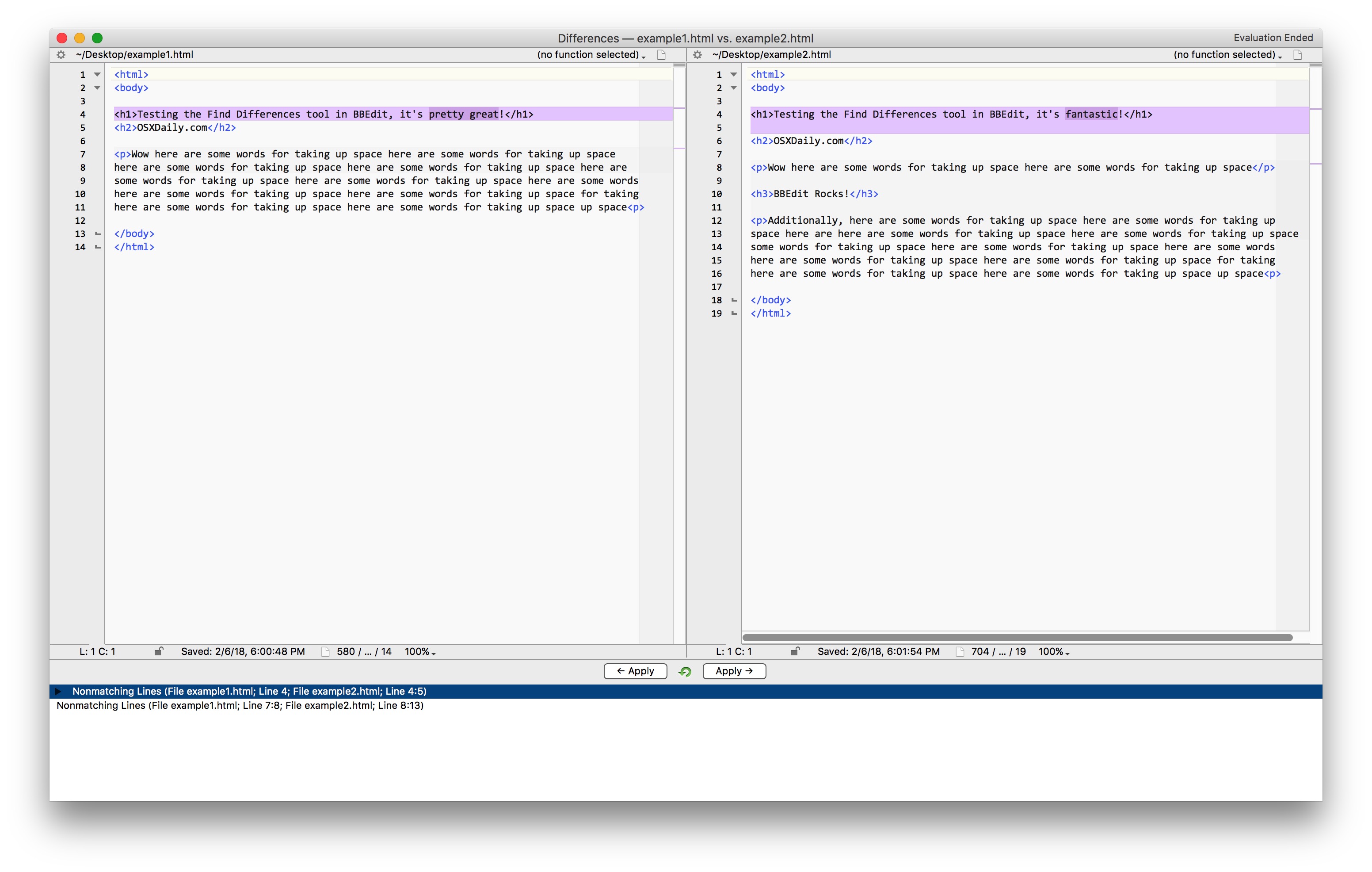
Sandvox () loses points for its limited customization and big but outdated selection of designs. However, it’s delightfully easy to use, including a super-simple integrated hosting service that seems fairly priced for what it offers. And changing the whole look of your site is as easy as choosing a new template. I think Sandvox would make a great choice for teachers and students, or for parents who want to help their kids build a fun, basic site.
Sparkle
Sparkle () is a perfectly respectable app that unfortunately gets outshined by EverWeb, which feels like Sparkle’s very similar-looking but ultimately superior cousin. I give Sparkle kudos for at least trying to make it easy to add third-party web fonts, even if the execution’s a little clunky. Its preset page sizes for responsive design also work better in concept than reality. Sparkle could become a real gem, but it needs more polish first.
Freeway Express
Living up to its name, Freeway Express () is free. And if you endure its labyrinthine help files, you can build some nifty things relatively quickly. But its cluttered interface can prove frustrating, and it renders pages with such sorely outdated techniques—years behind every other app here–that you’re probably better off avoiding it. A paid pro version offers a much more power and sophistication, but also costs a whopping $150.
Bottom line
Text editors are cheap or free, as are resources to teach yourself HTML, CSS, and jQuery—all more intuitive than they sound, even for non-geniuses. But that education demands dedication, time, and persistence, especially since today’s cutting-edge code quickly becomes tomorrow’s cobweb-covered embarrassment.
If you’d rather opt out of that Red Queen’s race, you’ll at least have a few good choices, whether you pick Blocs’ sleek simplicity or EverWeb’s user-friendly flexibility. I suspect Mac users will have even better, more complete options for building websites in a year or two. But for now, those two are the best of the bunch.
Softpress Systems Freeway Express 6
Read Macworld's reviewRiver SRL Sparkle
Read Macworld's reviewKarelia Software Sandvox 2
Read Macworld's reviewRealmac Software RapidWeaver 6
Read Macworld's reviewMacaw 1.5
Read Macworld's reviewRage Software EverWeb 1.8.2
Read Macworld's reviewCazoobi Blocs 1.3
Read Macworld's review
Mac OS X Hacking Tools
Hacking? Tool?
The Jargon File is a popular lexicographic resource amongst hackers (and non-hackers too). Although it might have some subjective definitions I may not agree with, I have conveniently quoted verbatim the definitions of the terms 'hacker' and 'tool' as a preface to the contents of this page.
hacker[originally, someone who makes furniture with an axe]
1. A person who enjoys exploring the details of programmable systems and how to stretch their capabilities, as opposed to most users, who prefer to learn only the minimum necessary. RFC1392, the Internet Users' Glossary, usefully amplifies this as: A person who delights in having an intimate understanding of the internal workings of a system, computers and computer networks in particular.
more>>>tool1. n.A program used primarily to create, manipulate, modify, or analyze other programs, such as a compiler or an editor or a cross-referencing program. Oppose app, operating system; see also toolchain.
more>>>So?
It is eminently debatable whether one (that means me, you or whosoever else) is a 'hacker', but such a debate would probably be fruitless anyway, even meaningless. I do enjoy exploring the details of all sorts of things, including operating systems. This page is a compendium of some programs you might come across while tinkering with Mac OS X. Documentation for most of these tools exists, therefore my aim is not to reproduce documentation, but simply to maintain a cache of relevant information. I believe this would be useful to those who are new to Mac OS X, but are interested in exploring the system at a low(er) level. Note that many of the tools listed here are ones that are either new to Mac OS X (as compared to Unix style systems), or are different from their Unix counterparts. In other words, I have avoided listing 'standard' Unix/BSD tools. Moreover, do realize that some (like dynamic_pager and various daemons) are not really tools.
The following list has not been fully updated for Panther (10.3.x).
Tools
KernelEventAgent
/usr/sbin/KernelEventAgent handles one of the core system services (events such as file systems being mounted and unmounted, low disk space, network connections going down, etc.)
SystemStarter
/sbin/SystemStarter is run during system initialization to handle 'startup items'. See 'Mac OS X System Startup' for details.
aexml
/usr/sbin/aexml forwards XMLRPC and SOAP requests to the AppleEvent manager for further dispatching. More documentation is available on the Apple Developer Web Site.
appleping
/usr/bin/appleping exercises the AppleTalk network by sending packets to a named host.
ardbgd

/usr/sbin/ardbgd is the daemon for the Apple Remote Debugging Service.
asr
/usr/sbin/asr (Apple Software Restore) efficiently copies disk images and volumes, and can also accurately clone volumes.
bless
/usr/sbin/bless is used to set volume bootability characteristics for Macintoshes. The command can be used to select a folder on a mounted volume to act as the blessed system folder, and optionally update Open Firmware to boot from that volume. It can also be used to format and setup a volume for the first time. Finally, it can be used to query the folder(s) that are blessed on a volume. Try the following (non-destructive) commands:
% sudo bless -verbose -info / ... % sudo bless -verbose -plist -info /
blued
/usr/sbin/blued is the Bluetooth daemon.
cac_*
/usr/sbin/cac_* are scripts related to CAC (Common Access Card) support. A CAC can be thought of as a SmartCard that combines multiple cards (functions) into one. A CAC can enable physical access to buildings and controlled places, enable computer network and system access and serve as the primary platform for the PKI token.
cmpdylib
/usr/bin/cmpdylib compares two dynamic shared libraries for compatibility.
createhomedir
/usr/sbin/createhomedir creates and populates local home directories.
ddb
ddb is a debugging mechanism that can be compiled into Mac OS X, similar to BSD's kdb. While gdb can be used over Ethernet (through a kernel stub), ddb is compiled into the kernel and is used over a serial line. Most importantly, ddb requires an actual built-in hardware serial line on the debug target. Fortunately, gdb should suffice for almost all debugging needs unless one is trying to debug an Ethernet driver itself, say.
ddb is not present by default on Mac OS X. It must be compiled from source (xnu/osfmk/ddb in the CVS tree).
defaults
/usr/bin/defaults is used to access (read, write and delete) Mac OS X user defaults from the command line. For example, the following will print out Desktop background settings (including the pathname for the desktop background image, if any):
% defaults read com.apple.desktop Background
dev_mkdb
/usr/sbin/dev_mkdb creates a hash access method database (based on Berkeley DB) in /var/run/dev.db. This database contains the name of all devices under /dev.
diskarbitrationd
/usr/sbin/diskarbitrationd is a daemon that listens for connections from clients, notifies clients of the appearance of disks and filesystems, and governs the mounting of filesystems and claiming of disks amongst clients.
disktool
/usr/sbin/disktool is a command line utility for disk arbitration. It can be used to rename, eject, mount or unmount disks and volumes.
diskutil
/usr/sbin/diskutil is a utility for managing disks and volumes. It can be used to perform operations such as enabling/disabling HFS+ journaling, verifying and repairing permissions, erasing disks (including optical media), partitioning, creating and managing RAID sets etc. You typically need root access to use this utility.
ditto
/usr/bin/ditto copies files and directories to a destination directory. ditto can be used to 'thin' 'fat' (multiple-architecture) exectuables. It can also copy files selectively based on the contents of a BOM ('Bill of Materials'). One of the most useful features of ditto is that it can preserve resource fork and HFS meta-data information when copying files.
drutil
/usr/bin/drutil is a command line tool that uses the DiscRecording framework to interact with attached CD/DVD burning devices.
dscl
/usr/bin/dscl is the Directory Service command line utility.
dsperfmonitor
/usr/bin/dsperfmonitor is a directory tool for testing plugin performance in Directory Services.
dynamic_pager
/sbin/dynamic_pager is started during system initialization to manage swap files. See Mac OS X System Startup for details.
fdisk
/usr/sbin/fdisk displays or changes the DOS partition table found in the bootsector of x86 bootable disks.
fixPrecomp
/usr/bin/fixPrecomp is a tool for 'fixing' precompiled header warnings that occur when headers get out-of-sync with their precompiled versions - after a system update, say.
fixproc
/usr/bin/fixproc is a Perl script that 'fixes' a named process by performing the specified action (which can be check, kill, restart, exist or fix).
fs_usage
/usr/bin/fs_usage presents an ongoing display of system call usage information pertaining to file system activity. By default this includes all system processes except the running fs_usage process, Terminal, telnetd, sshd, rlogind, tcsh, csh and sh.
fstat
/usr/bin/fstat identifies open files (including sockets).
heap
/usr/bin/heap lists all the malloc-allocated buffers in the specified process's heap.
hdiutil
/usr/bin/hdiutil uses the DiskImages framework to manipulate disk image files.
hlfsd
/usr/sbin/hlfsd is the home-link file system daemon. It implements a file system containing a symbolic link to a subdirectory within a user's home directory, depending on the user which accessed that link.
installer
/usr/sbin/installer is the Mac OS X system software and package installer tool.
install_name_tool
/usr/bin/install_name_tool changes the dynamic shared library install names recorded in a Mach-O binary.
ioalloccount
/usr/sbin/ioalloccount displays some accounting of memory allocated by IOKit allocators, including object instances, in the kernel. This is useful for tracking memory leaks.
ioclasscount
/usr/sbin/ioclasscount displays the instance count, offset by the number of direct subclasses that have at least one instance allocated, for the classes specified. This is useful for tracking leaks.
ioreg
/usr/sbin/ioreg displays the IOKit registry. Try ioreg -l, for example, and you can see detailed registry information (including object properties) - such as details of various temperature sensors in the system (on the I2C bus).
iostat
/usr/sbin/iostat displays kernel I/O statistics on terminal, disk and cpu operations.
ipconfig
/usr/sbin/ipconfig can be used to get the number of network interfaces active (the ifcount argument), and also to retrieve various options associated with these interfaces. For example, 'ipconfig getoption en1 lease_time' prints the DHCP lease time of en1 if applicable. Finally, ipconfig can also be used to set an interface for BOOTP, DHCP etc.
Html Tool Mac Free
kdump
/usr/bin/kdump displays the kernel trace files produced with ktrace in human readable format.
kextcache
/usr/sbin/kextcache creates or updates kext caches, which are used to speed up kernel extension loading operations and to prepare kexts for inclusion in such media as device ROM.
kextload
/sbin/kextload can be used to explicitly load kernel extensions, validate them to see that they can be loaded by other mechanisms, such as kextd, and to generate symbol files for debugging the kext in a running kernel.
kextstat
/usr/sbin/kextstat displays the status of any kernel extensions currently loaded in the kernel.
kextunload
/sbin/kextunload is used to terminate and unregister IOKit objects associated with a kernel extension and to unload the code and personalities for that kext.
kgmon
/usr/sbin/kgmon generates a dump of the operating system's profile buffers for later analysis by gprof.
ktrace
/usr/bin/ktrace enables kernel trace logging for the specified processes, causing trace data to be logged to a file. Traced kernel operations include system calls, namei translations, signal processing and I/O.
latency
/usr/bin/latency is used for monitoring scheduling and interrupt latency. The tool can also be used to set real time or timeshare scheduling policies.
ld
/usr/bin/ld is the (Mach) object file link editor.
leaks
/usr/bin/leaks examines a specified process for malloc-allocated buffers which are not referenced by the program.
lipo
/usr/bin/lipo creates or operates on multi-architecture ('fat') files. It can list the architecture types in a fat file, create a single fat file from one or more input files, thin out a single fat file to a specified architecture type, and extract, replace and/or remove architecture types from the input file.
lockfile
/usr/bin/lockfile can be used to create one or more (conditional) semaphore files, with the provision of waiting for a specified number of seconds and a specified number of retries.
lsbom
Itool For Mac
/usr/bin/lsbom interprets the contents of binary bom (bill-of-materials) files. bom is a file system used by the Mac OS X installer to determine which files to install, remove, or upgrade.
lsof
/usr/sbin/lsof lists information about files opened by processes.
lsvfs
/usr/bin/lsvfs lists known (currently loaded) virtual file systems.
mDNSResponder
Free Snipping Tool For Mac
/usr/sbin/mDNSResponder (Multicast DNS Responder) listens for and responds to DNS-format query packets sent via Multicast to UDP port 5353.
mach_init
/sbin/mach_init is a daemon that maintains various mappings between service names and the Mach ports that provide access to those services.
malloc_history
/usr/bin/malloc_history inspects a given process and lists the malloc allocations performed by it. It relies on information provided by the standard malloc library when debugging options have been turned on.
mig
/usr/bin/mig (Mach Interface Generator) is used to compile procedural interfaces to Mach's message-based APIs, based on descriptions of those APIs.
mkbom
/usr/bin/mkbom creates a bom (bill-of-materials) given a directory.
mkextunpack
/usr/sbin/mkextunpack extracts the contents of a multikext (mkext) archive.
netstat
/usr/sbin/netstat symbolically displays the contents of various network-related data structures.
nibindd
/usr/sbin/nibindd is a daemon that is responsible for finding, creating and destroying NetInfo servers.
nibtool
/usr/bin/nibtool is used for printing, verifying and updating nib files.
nicl
/usr/bin/nicl is a general-purpose utility for operating on NetInfo databases. Its commands allow one to create, read and manage NetInfo data.
nidomain
/usr/sbin/nidomain is an interface to nibindd to which it sends all of its requests about the domains served on a given machine. It can also be used to create and destroy NetInfo databases.
nifind
/usr/bin/nifind finds a directory in the NetInfo hierarchy.
nigrep
/usr/bin/nigrep searches for a regular expression in the NetInfo hierarchy.
niload
/usr/bin/niload loads information from standard input into the given NetInfo domain.
nireport
/usr/bin/nireport prints tables from the NetInfo hierarchy.
niutil
/usr/bin/niutil is used to do arbitrary reads and writes on the given NetInfo domain.
nmedit
/usr/bin/nmedit is used to change global symbols to local symbols. It differs from strip in that it also changes the symbolic debugging information for the global symbols it changes to static symbols so that the resulting object can still be used with a debugger.
notifyd
/usr/sbin/notifyd is a daemon that facilitates processes to exchange stateless notification events.
nvram
/usr/sbin/nvram allows manipulation of Open Firmware non-volatile RAM variables.
Free Tool For Mac
objcopy
objcopy is part of binutils that you can download, compile and install. This utility copies the contents of an object file to another, using the GNU BFD (Binary File Descriptor) library to access the object files.
objdump
objdump is part of binutils. It displays information (including disassembly, if required) about one or more object files.
open
/usr/bin/open is a command line utility to open a file (or a directory or URL), just as if you had double-clicked the file's icon.
open-x11
/usr/bin/open-x11 is a wrapper shell script that provides open functionality for X11 applications.
orbd
/usr/bin/orbd is the Object Request Broker Daemon. It is a tool to enable clients to transparently locate and invoke persistent objects on servers in the CORBA environment.
osacompile
Chrome Cleanup Tool For Mac
/usr/bin/osacompile compiles the given files, or standard input if non are listed, into a single output script.
osalang
/usr/bin/osalang prints information about installed OSA (Open Script Architecture) languages.
osascript
/usr/bin/osascript executes the given script file, or standard input if none is given. Scripts may be plain text or compiled scripts.
otool
Adware Removal Tool For Mac
/usr/bin/otool displays specified parts of object files or libraries (similar to ldd on Linux).
pagestuff
/usr/bin/pagestuff displays information about the specified logical pages of a file conforming to the Mach-O executable format.
pax
/bin/pax is a tool for reading, writing, and listing members ofan archive file. It is also used to copy directory hierarchies. pax supports various archive formats such as cpio, bcpio, sv4cpio, sv4crc, tar, and ustar.
pbcopy
/usr/bin/pbcopy is used to copy standard input to the pasteboard buffer.
pbpaste
/usr/bin/pbpaste prints the contents of the pasteboard buffer.
pcscd
/usr/sbin/pcscd is a daemon used to dynamically allocate/deallocate Smart Card reader drivers at runtime and manage connections to the readers. Related utilities include /usr/bin/pcsctest and /usr/bin/pcsctool. These tools are taken from the MUSCLE (Movement for the Use of Smart Cards in a Linux Environment) project, a project to coordinate the development of smart cards and applications under Linux.
pdisk
/usr/sbin/pdisk is a menu driven program which partitions disks using the standard Apple disk partitioning scheme.
plutil
/usr/bin/plutil can be used to check the syntax of property list files, or convert a plist file from one format to another.
pmset
/usr/bin/pmset changes and reads power management settings such as idle sleep timing, wake on administrative access, automatic restart on power loss, etc.
pstat
/usr/sbin/pstat displays open file entry, swap space utilization, terminal state, and vnode data structures.
redo_prebinding
/usr/bin/redo_prebinding is used to redo the prebinding of an executable or dynamic library when one of the dependent dynamic library changes. The input file, executable or dynamic library, must have initially been prebound for this program to redo the prebinding.
say
/usr/bin/say uses the Speech Synthesis manager to convert input text to audible speech and either play it through the sound output device chosen in System Preferences or save it to an AIFF file.
screencapture
/usr/sbin/screencapture captures the screen (a window selection or a mouse selection) to the clipboard or a file (as PDF).
scselect
/usr/sbin/scselect is used to change current network location, or to list defined locations.
sc_usage
/usr/bin/sc_usage displays an ongoing sample of system call and page fault usage statistics for a given process.
scutil
/usr/sbin/scutil is a tool to communicate with configd, read and write from/to the configuration data store etc.
security
/usr/bin/security provides a command line interface to administer Keychains, manipulate keys and certificates, and do most things the Security framework is capable of.
segedit
/usr/bin/segedit extracts and/or replaces the named sections from the specified input file and creates an output.
setregion
/usr/bin/setregion is the command line utility for setting the DVD drive's 'region'.
sips
/usr/bin/sips is a command line interface to the Scriptable Image Processing Server. The graphical abilities of Mac OS X are exposed through this image processing service. The SIPS architecture contains tools for performing basic image alterations and support various image formats. The goal is to provide quick, convenient, desktop automation of common image processing operations.
slpd
/usr/sbin/slpd is the Service Location Protocol daemon that advertises local services to the network.
slp_reg
/usr/sbin/slp_reg is a tool to register URLs via the Service Location Protocol in order for remote machines to discover locally registered services.
softwareupdate
/usr/sbin/softwareupdate is a command line utility to perform software updates under Mac OS X.
srm
/usr/bin/srm securely (by overwriting, renaming, and truncating before unlinking) removes files or directories.
sw_vers
/usr/bin/sw_vers prints the product name (such as Mac OS X), version and build number.
sysctl
/usr/sbin/sysctl retrieves kernel state and allows processes with appropriate privilege to set kernel state.
system_profiler
/usr/sbin/system_profiler is the command line system profiling utility.
tcpdump
/usr/sbin/tcpdump dumps traffic on a network.
Snippet Tool For Mac
top
/usr/bin/top displays an ongoing sample of system usage statistics (such as cpu utilization, memory usage etc. for each process).
trpt
/usr/sbin/trpt interrogates the buffer of TCP trace records created when a socket is marked for debugging (via setsockopt()) and prints a readable description of these records.
update_prebinding
/usr/bin/update_prebinding tries to synchronize prebinding information for libraries and executables when new files are added to a system. Prebinding information is pre-calculated address information for libraries used by a given executable or library. By pre-determining where a function in another library is destined to be placed, the dynamic linker does not have to resolve symbols at application startup time.
vm_stat
/usr/bin/vm_stat displays Mach virtual memory statistics.
vmmap
/usr/bin/vmmap displays the virtual memory regions allocated in a specified process, indicating how memory is being used, and what the purposes of memory at a given address might be.
vpnd
/usr/sbin/vpnd is the Mac OS X VPN service daemon.
xcode*
/usr/bin/xcode* are Xcode related commands.
xxd
/usr/bin/xxd creates a hex dump of a given file or standard input. It can also convert a hex dump back to its original binary form.