Cd Burn Tool For Mac
Although CDs and DVDs are a dying media in 2017 you can still easily burn a CD or DVD on Mac using iTunes. Whether you want to burn a CD to play in an old car stereo, burn an MP3 CD, burn photos to a CD on Mac or just burn some files onto DVD, it’s extremely simple using iTunes. Although there are several burning software on Mac for burning CDs and DVDs on Mac, iTunes is free and very easy to use. Here we show you how to burn a CD on Mac and burn a DVD on Mac in a matter of minutes with iTunes.
- How To Burn Cd In Windows 10
- How To Burn Cd From My Computer
- Itool For Mac
- Cd Burning Software For Mac Free Download
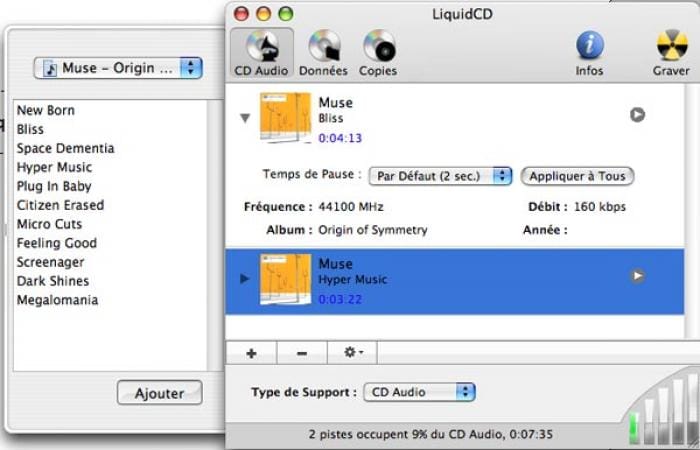
First, here's an open source CD/DVD burning tool for Mac OS X named Burn. I haven't checked it out yet, but I'll give it a spin the next time I need to burn something. I haven't checked it out yet, but I'll give it a spin the next time I need to burn something. DVD Creator Tool Burn Video is an easy-to-use DVD maker tool for Mac. This application can custom menu. Tool Burn Video is an easy-to-use DVD maker tool.you edit videos using tools like trim, crop. 'Is there DVD burning software allow me to burn a video to DVD on my Mac (Sierra)?' If you want to burn DVD on your Mac, you can find many DVD burner for Mac (10.13 macOS High Sierra included), such as Burn, iTunes, Disk burner, Disco, etc. This DVD burner for Mac can do the basic task on writing a disk quite easily. CD burning tools found in this software are divided into four modules: Home, Capture & Import, Create & Edit and Burn. These modules are easily understood and contain the most audio disc tools of all the programs we reviewed. GBurner is a CD/DVD burning tool, which can create and burn data/audio CDs and DVDs, make bootable data CDs and DVDs, create multisession discs. GBurner is also a disc image file processing tool, which can extract, edit, and burn iso image files.
Before you start, you’ll need to make sure you have the following:
- A CD or DVD recorder. If your Mac was built before 2011, it will already have an internal Apple SuperDrive (or if it’s really old, an Apple Combo drive) which can burn CDs and DVDs. However, since the beginning of 2011, Apple phased them out and Macs no longer include an internal CD or DVD player. You’ll therefore need to purchase an external SuperDrive or CD/DVD recorder that you can connect to your Mac’s USB ports. You can buy external Apple SuperDrives for around $70 but you can also use just about any external CD/DVD burner. For example, the VersionTech USB DVD CD Burner SuperDrive does exactly the same job as the Apple SuperDrive but costs just $29.99.
- A blank CD or DVD. There are two types of blank CDs and DVDs – CD-R or CD-RW and DVD-R or DVD-RW. The RW simply means the discs are re-writable i.e. you can can burn them and reuse them as many times as you like. R means that they are record only i.e. can only perform one burn on them and after which you cannot burn them or reuse them again. Note that most modern CD and DVD players can play both R and RW discs but older ones may not be able to play RW so you should check with your CD/DVD player manufacturer or model first. If you’re unsure and want to make a music CD that plays in any CD player, play it safe by going for a CD-R disc. Note that all blank CDs can record a maximum of 80 minutes of music or 700MB of data (about 150 MP3 files) and a standard DVD records up to 4.7GB of data. There are however other types of blank DVD formats with higher capacity and features and the DVD comparison table below gives a good overview of the current market.
If you’ve got both a CD/DVD burner and some blank discs, then you’re ready to go!
For most people, the main reason they want to burn a CD is to burn a music CD on Mac that plays in any CD player so that’s the example we’ll use. However, the process is exactly the same if you want to burn an MP3 CD or a data DVD. The only difference is step 6 where you must select the appropriate type of CD or DVD you want to create. Note that you can only burn data to DVDs using iTunes – you cannot burn iTunes movies to play on DVD as they are protected by Apple’s DRM (Digital Rights Management) although there are utilities that can help you remove this.
- Open iTunes from your Application folder, Dock or by searching for it in Spotlight.
- Create a playlist in iTunes. To create a playlist go to File > New > Playlist.
- Click on Edit Playlist.
- Then just simply drag and drop the songs you want to burn to a CD. iTunes allows you to change the order of songs in the playlist by dragging and dropping them up and down. If you have a Touch Bar Mac, you can also select the songs and press the “Add To Playlist” button to add them. You can delete tracks by selecting them and pressing delete (this will not delete them from your iTunes collection, only from the playlist). The amount of songs you can add depends on whether you want to burn a music audio CD which can play in any CD player or an MP3 CD which can only play in MP3 players or computer CD drives. Be aware that a CD can only hold about 80 minutes of music so that’s going to be around 10-15 songs. If you exceed this limit, iTunes will try to record the music on two or more discs to fit them all on so make sure you don’t exceed this time limit. To view how much playing time your playlist is, go to View > Show Status Bar and you’ll see it appear at the bottom of iTunes. If you want to burn an MP3 CD, you can fit up to 700MB of songs on there which is around 150 MP3 files. Note that songs you have purchased from the iTunes store, you can burn as many times as you like as long as they are iTunes Plus songs. If they are not iTunes Plus tracks, you can only burn each track up to seven times.
- When you’re happy with your playlist, go to File > Burn Playlist To Disc.
- In the dialog that appears, leave the preferred speed on “Maximum Possible” and next to Disc Format, choose whether you want to burn an audio CD (that will play in any CD player), MP3 CD or Data CD. Note that if you select Audio CD, you can also choose how long a gap you want between songs and ensure that the sound levels are equal for each track (so that you don’t get some tracks playing loud and some too quiet) by selecting “Use Sound Check”. If the CD player or car stereo that you’ll be playing the CD in also displays text information such as the artist and song on a digital display, also select “Include CD Text”.
- When you’re ready, click Burn at the bottom and iTunes will start to create your CD.
- You will see the status of the burning process at the top of the iTunes interface. Burning the CD on your Mac may take several minutes and you can cancel the process at any time by clicking the “X” but if you’re using a CD-R disc, you won’t be able to use it again (as oppose to CD-RW discs which you can use to burn as many times as you like).
- When the CD is complete, it will appear in your iTunes menu on the left hand side. Click the eject button to remove it from the CD burner.
- That’s it you’re done! If you want to make your CDs look really professional, some printers can even print a cover onto your CD. Check out our guide to all in one printers for Mac for more.
Note that although burning files to a CD or DVD is a perfectly legitimate way to backup your data, you’re much better off nowadays using an external hard drive for Mac. iTunes also won’t be any use if you need to burn an ISO on Mac – you’ll need one of these Nero for Mac alternatives for all other CD and DVD burning tasks.
How To Burn Cd In Windows 10
If you have any problems burning a CD or DVD on your Mac after following this tutorial, let us know in the comments below and we’ll try to help.
Creating installation media for your operating system of choice used to be simple. Just download an ISO and burn it to CD or DVD. Now we’re using USB drives, and the process is a little different for each operating system.
How To Burn Cd From My Computer
You can’t just copy files from an ISO disc image directly onto your USB drive. The USB drive’s data partition needs to be made bootable, for one thing. This process will usually wipe your USB drive or SD card.
Use a USB 3.0 Drive, If You Can
USB 2.0 has been around forever, and everything supports it, but it’s notoriously slow. You’ll be much better off making the upgrade to USB 3.0 since the prices have dropped dramatically, and the speed increases are enormous… you can get 10x the speed.
And speed really matters when you’re making a boot drive.
Editor’s Note: We use this Silicon Power USB 3.0 drive here at How-To Geek, and at $15 for a 32 GB version, it’s well worth the upgrade. You can even get it in sizes up to 128 GB if you want.
Don’t worry about compatibility, these faster drives are fully compatible with an old USB 2.0 system, you just won’t get the speed boosts. And if your desktop computer doesn’t support USB 3.0 you can always upgrade it to add support.
For Windows 7, 8, or 10
RELATED:Where to Download Windows 10, 8.1, and 7 ISOs Legally
Use Microsoft’s own Windows USB/DVD download tool to create a bootable drive you can install Windows from. You’ll need a Windows installer ISO file to run this tool. If you don’t have one, you can download Windows 10, 8, or 7 installation media for free — you’ll need a legitimate product key to use them, though.
Provide the ISO file and a USB flash drive and the tool will create a bootable drive.
RELATED:How to do a Clean Install of Windows 10 the Easy Way
Alternatively, if you’re installing Windows 10, you can download an ISO or burn Windows 10 installation media directly using Microsoft’s Media Creation Tool.
From a Linux ISO
RELATED:How to Create a Bootable Linux USB Flash Drive, the Easy Way
Itool For Mac
There are many tools that can do this job for you, but we recommend a free program called Rufus—it’s faster and more reliable than many of the other tools you’ll see recommended, including UNetbootin.
Download the Linux distribution you want to use in .ISO form. Run the tool, select your desired distribution, browse to your downloaded ISO file, and choose the USB drive you want to use. The tool will do the rest. You can see a full step-by-step guide here.
You can use similar tools on Linux. For example, Ubuntu includes a Startup Disk Creator tool for creating bootable Ubuntu USB drives.
From an IMG File
Some operating system projects provide an IMG file instead of an ISO file. An IMG file is a raw disk image that needs to be written directly to a USB drive.
Use Win32 Disk Imager to write an IMG file to a USB drive or SD card. Provide a downloaded IMG file and the tool will write it directly to your drive, erasing its current contents. You can also use this tool to create IMG files from USB drives and SD cards.
Linux users can use the dd command to directly write an IMG file’s contents to a removable media device. Insert the removable media and run the following command on Ubuntu:
Cd Burning Software For Mac Free Download
Replace /home/user/file.img with the path to the IMG file on your file system and /dev/sdX with the path to your USB or SD card device. Be very careful to specify the correct disk path here — if you specify the path to your system drive instead, you’ll write the contents of the image to your operating system drive and corrupt it
For DOS
RELATED:How to Create a Bootable DOS USB Drive

If you need to boot into DOS to use a low-level firmware upgrade, BIOS update, or system tool that still requires DOS for some reason, you can use the Rufus tool to create a bootable DOS USB drive.
Rufus uses FreeDOS, an open-source implementation of DOS that should run whatever DOS program you need to use.
From Mac OS X Installation Files
RELATED:How to Wipe Your Mac and Reinstall macOS from Scratch
You can create a bootable drive with Mac OS X on it by downloading the latest version of OS X from the Mac App Store. Use Apple’s included “createinstallmedia” tool in a terminal or by run the third-party DiskMaker X tool.
The Mac OS X drive can be used to install OS X on other Macs or upgrade them to the latest version without any long downloads.
From a Windows ISO for Mac
RELATED:How to Install Windows on a Mac With Boot Camp
If you plan on installing Windows on a Mac via Boot Camp, don’t bother creating a bootable USB drive in the usual way. Use your Mac’s Boot Camp tool to start setting things up and it will walk you through creating a bootable Windows installation drive with Apple’s drivers and Boot Camp utilities integrated.
You can use this drive to install Windows on multiple Macs, but don’t use it to install Windows on non-Apple PCs.
Some of these tools overlap — for example, Rufus can also be used to create bootable drives from Linux ISOs, IMG files, and even Windows ISO Files. We suggested the most popular, widely recommended tools for each task here.
Image Credit: USBMemoryDirect on Flickr
READ NEXT- › What Can I Do with My Old iPhone?
- › How to Stream UFC 242 Khabib vs. Poirier Live Online
- › Free Download: Microsoft’s PowerToys for Windows 10
- › How to Overclock Your Computer’s RAM
- › What’s New in Chrome 77, Arriving September 10